How Professional Tree Services Help Prevent Property Damage
Quick Answer: Most property damage from trees doesn't come out of nowhere. It builds for years: root growth pressing against foundations and pipes, storm-loaded limbs weakening at their attachment points, hazard trees leaning a little more with every windstorm. A trained eye catches these problems while they're still manageable, through root and soil assessment, structural pruning, and controlled removal, long before you're looking at a cracked driveway, a backed-up sewer line, or a limb through the roof.
If you've lived in the Willamette Valley for more than a season, you already know the pattern. Months of soaking rain leave the ground saturated, then a windstorm tests every weak point in the yard. Douglas fir and big-leaf maple grow fast here, and they grow large, so their root systems and canopies are constantly pushing against whatever's in their way: a foundation, a sewer line, a fence, a parked car. Understanding how that pressure builds, and where professional tree work actually steps in, is what lets you protect the property instead of reacting after something breaks.
When Roots Start Working Against Your Home
Roots get blamed for a lot of foundation and hardscape problems, and sometimes fairly, but the mechanics are more specific than most people assume. A healthy root pushing against solid concrete doesn't generate much force. Research on root-infrastructure conflicts has found that root growth rarely cracks a sound foundation on its own. What roots are very good at is finding a weakness that already exists: a hairline crack in a sewer joint, a control joint in a driveway slab, a gap where a sidewalk meets a curb. Those are low-resistance paths toward water and oxygen, and root tips grow toward exactly that kind of opportunity. Once a root wedges into a joint or a crack, it thickens a little more every year, and that slow, steady expansion is what eventually turns a small gap into a real problem.
Willamette Valley soil adds another layer to this. Many yards here sit on heavier clay and silt soils that hold water through the wet months and then contract as they dry out in summer. A tree growing close to a foundation can pull a meaningful amount of moisture from that soil during a dry stretch. As the soil around a shallow foundation shrinks, the foundation can settle unevenly and crack. It's a slower, quieter kind of damage than a fallen limb, but it's just as real, and it's driven by where a tree was planted and how its root system was allowed to develop, not by bad luck.
Sewer lines follow a similar story. Roots don't need a crack to be dramatic. A loose joint or a slightly separated pipe segment is enough to draw them in, because that's where moisture and air are escaping. Once inside, roots branch and thicken with the flow of the pipe, and what started as a hairline intrusion becomes a partial or full blockage. Homeowners usually notice this as slow drains or backups long before they'd ever think to connect it to a tree thirty feet away.
Tip: If you're noticing new cracking in a driveway or patio near a mature tree, or slow drains that keep coming back after clearing, ask for a root and soil assessment before assuming the surface problem is the whole story. Matching what's happening above ground to what the root system is doing below it is the only way to know whether trimming roots, adjusting drainage, or something more is the right next step.
Storm-Risk Hazard Trees in the Willamette Valley
A tree's stability depends almost entirely on its root plate, the dense mat of structural roots radiating out from the trunk, usually concentrated within the first several feet. Picture a wine glass resting on a dinner plate. The trunk and canopy are the glass, and the root plate is the base holding it upright against gravity and wind. As long as the roots grip firmly into stable soil, the tree can flex in a storm and come back to center.
Saturated soil changes that equation. When the ground has taken on weeks of rain and a windstorm rolls through, the soil around the root plate can lose enough structure that it behaves almost like loose gravy instead of firm ground. The roots are still there. They're just no longer gripping, they're sliding. Add sustained wind pushing against a full, wet canopy, and a tree that looked perfectly healthy the week before can go over. That's exactly why storm damage in this region tends to cluster in the days right after a heavy rain event, not during the driest part of summer.
Certain conditions make a tree more likely to fail this way. Roots cut or damaged by past construction, trenching, or grade changes near the trunk shrink the size of that root plate and weaken the tree's anchoring, sometimes for years before it becomes visible. Root decay does something similar from the inside, often showing up as mushrooms near the base or dead branches scattered through the canopy rather than any obvious wound. And trees growing in compacted or confined soil, a common situation near driveways, patios, and additions, tend to develop shallower, less balanced root systems that simply don't hold as well in a downpour.
A tree that's starting to fail often gives a warning before it goes. A visible lean, especially a new one, is worth taking seriously. So is soil that's heaving or cracking on one side of the trunk, which can mean the root plate is already pulling loose from the ground, or a shallow depression forming on the opposite side, where the plate is pressing down. These are the signs a hazard evaluation is built to catch: trunk and limb structure, root flare, soil condition, and the tree's position relative to your house, driveway, and any nearby power lines, so a lean or a patch of fungal growth gets addressed while the tree is still standing.
Why Professional Pruning Reduces the Odds of a Limb Coming Down
Limb failure has its own set of mechanics, and it's rarely random. Weak attachment points, where two limbs of similar size grow so close together that bark gets pinched between them instead of forming solid wood, are a common failure point, especially in fast-growing species like big-leaf maple. Under normal conditions, that union might hold for years. Add the extra weight of a soaked, rain-heavy canopy and a gust of wind pushing against it, and that same union is where the tree gives.
Deadwood adds to the risk a different way. A dead limb has no living tissue holding it in place, so it depends entirely on how it's still attached, and in a wet climate, that attachment weakens faster because decay organisms thrive in damp wood. Limbs that have grown out over a roofline, a driveway, or a parking area concentrate this risk right where it matters most. That's exactly where a failure does the most damage.
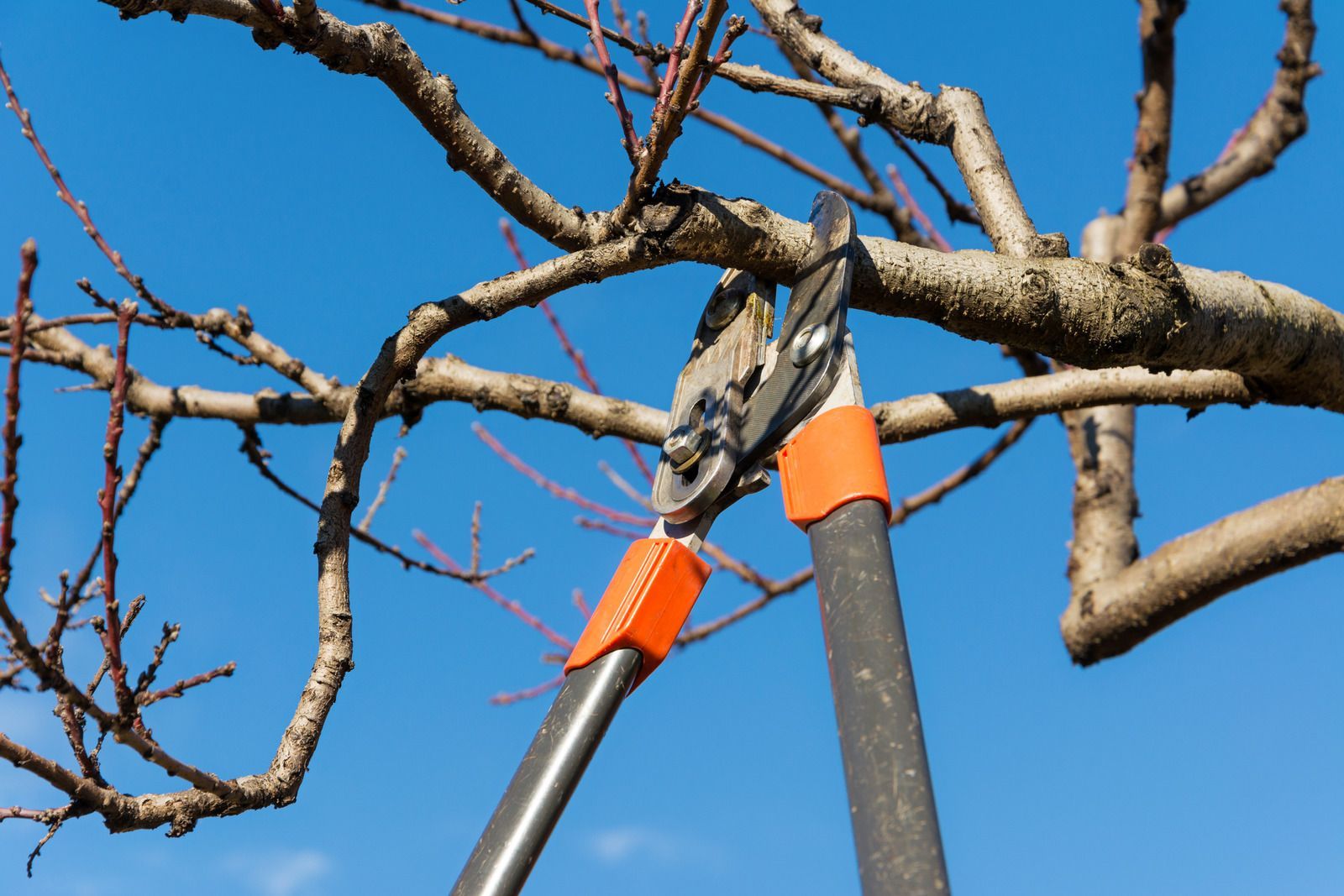
Structural pruning goes after these weak points directly. Removing deadwood and poorly attached limbs, thinning an overly dense canopy so wind moves through it instead of loading against it like a sail, and shortening limbs that overextend toward a structure all reduce the load a tree has to carry through a storm. Where and how a cut is made matters as much as what gets removed. A clean cut just outside the branch collar lets the tree seal the wound properly. Cuts made in the wrong spot, or aggressive practices like topping, leave open wounds that invite decay and often trigger a burst of weak, fast regrowth that's more likely to fail later, not less.
When Removal Is the Safer Path (and How It's Done to Protect What's Around It)
Sometimes a tree has passed the point where pruning or cabling changes the outcome: extensive trunk decay, a root plate that's already compromised, or damage severe enough that the structural risk outweighs what's left to save. In those cases, controlled removal is what actually protects the house, the driveway, and the neighbor's fence, rather than waiting to see what a future storm does with it.
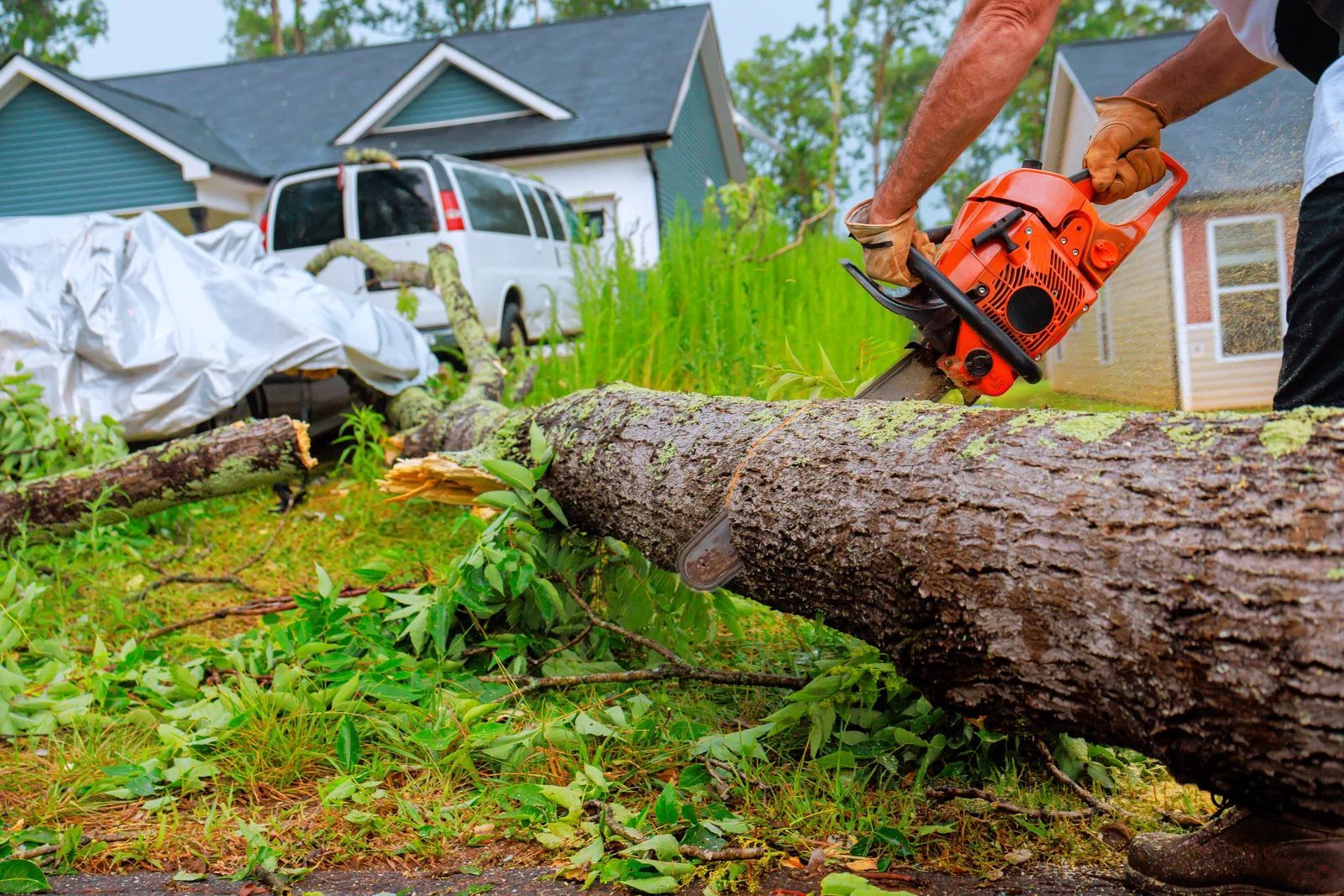
The difference between a controlled removal and an uncontrolled failure comes down entirely to method. A professional crew evaluates the tree's lean, weight distribution, and surrounding obstacles before making the first cut, then uses rigging systems to lower sections along a controlled path instead of letting them drop freely. In tight yards where a straight fall would clear a fence, a shed roof, or a parked vehicle, sections get lowered piece by piece with ropes and pulleys, or a crane gets brought in to lift heavy sections up and over the obstacle entirely. That kind of planning is what keeps a hazardous tree from becoming a second problem on the way down.
Warning: Never attempt to remove a leaning, storm-damaged, or heavily decayed tree yourself, and don't assume a chainsaw and a rope are enough for anything beyond small, ground-level brush. A tree under compression from a lean, or one that's already lost significant root support, can shift or fall unpredictably the moment a cut releases that tension, and if it's anywhere near power lines, the danger multiplies. This is exactly the kind of situation professional rigging and directional felling exist for.
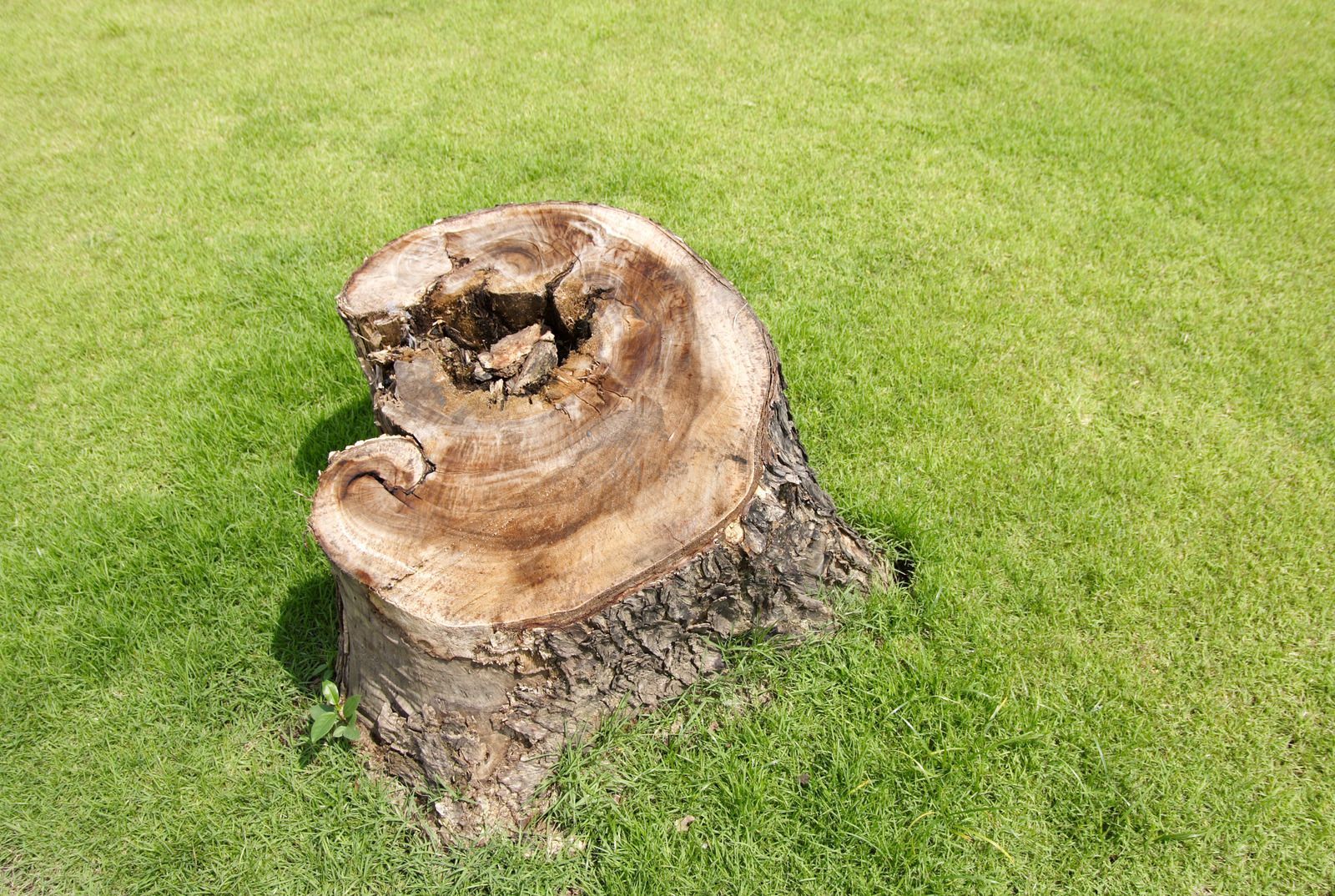
Once a tree is down, the job isn't finished, at least not from a property-protection standpoint. A stump left in place keeps growing roots for a while longer, and depending on the species, it can send up sprouts that eventually create the same root-pressure problem you just removed the tree to avoid. Grinding the stump down and clearing debris closes that loop and leaves the area ready for whatever comes next, whether that's new landscaping or just a flat, safe stretch of yard.
Frequently Asked Questions
Can I tell if a tree's roots are affecting my foundation without digging anything up?
Not completely, but widening foundation cracks, sticking doors or windows, uneven slabs, and unusually dry soil near mature trees can indicate possible root-related movement that deserves a professional assessment.
Does trimming a tree's roots to protect a driveway or foundation hurt the tree?
Yes, cutting major roots, especially close to the trunk, can weaken stability and affect tree health. Root trimming should consider overall root structure before removing anything near foundations or driveways.
How often should hazard trees near my house be checked in the Willamette Valley?
Hazard trees should generally be inspected annually, preferably before the wet season. Additional evaluations are sensible after major windstorms, construction, visible leaning, root disturbance, or signs of developing decay nearby.
Is a leaning tree always an emergency?
Not necessarily. Some trees naturally grow with stable leans. However, a new or increasing lean accompanied by exposed roots, cracked soil, or ground heaving can indicate developing structural instability nearby.
What's the difference between storm damage and a tree that was already failing?
Storm damage can affect otherwise healthy trees, while complete failure often reveals existing weaknesses. Root damage, internal decay, poor branch attachments, or structural defects may remain hidden until severe weather arrives.
Protecting Your Property Starts With Healthy Trees
Property damage from trees often develops gradually, making early attention to root growth, structural weaknesses, dead limbs, and soil conditions especially important. Professional assessment and proper tree care can reduce the likelihood of damaged roofs, cracked hardscapes, blocked sewer lines, or unstable trees during severe weather. With over 30 years of experience, J & J Stump & Tree Removal understands the tree conditions and seasonal challenges that affect residential properties throughout Salem, Oregon, and the surrounding Willamette Valley area.
Regular pruning, thoughtful root management,
hazard evaluation, and controlled removal all play important roles in maintaining safer surroundings without unnecessarily removing healthy trees. Understanding how each tree interacts with nearby foundations, driveways, utilities, and structures allows potential concerns to be managed before they become expensive property problems. In Salem’s wet climate, where saturated soil and seasonal windstorms can expose hidden weaknesses, consistent professional tree care helps preserve tree health, structural stability, and the long-term condition of the property around it.